
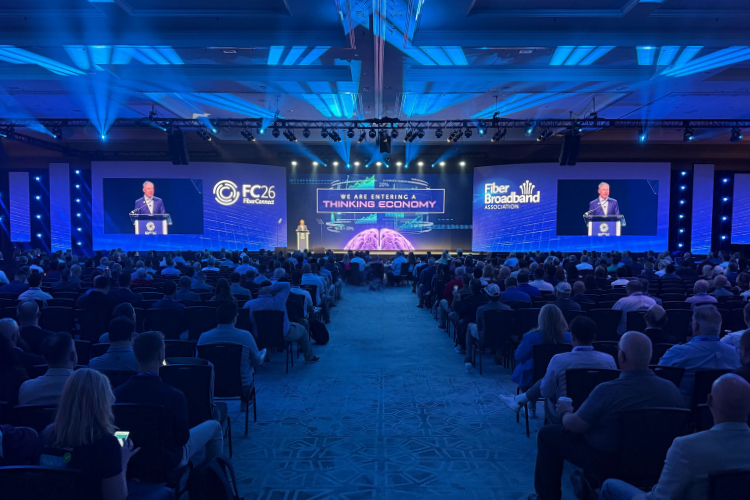
Fiber Connect 2026 confirmed what teams across the industry are already feeling: the U.S. fiber build is still very much in motion. Across the show floor, conversations were direct, operators were engaged, and the teams responsible for building, managing, and scaling networks were asking harder questions about the tools they rely on.
The build cycle isn't over
Fiber expansion isn't slowing down. AT&T alone is planning to expand its fiber footprint by 8 million locations in 2026, targeting 40 million total passings by year end.¹ Seventy-one providers have announced significant expansion plans, with more homes expected to be passed by fiber in 2026 than in either of the two previous years.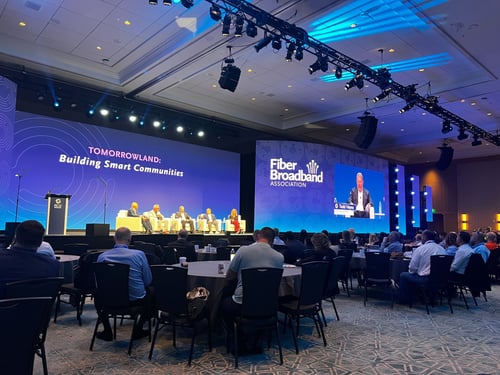
But the story is shifting. Alongside continued FTTH growth, data center fiber demand is accelerating rapidly, adding a new tier of complexity to network planning and deployment. Operators aren't just building to homes anymore. They're building to connect distributed infrastructure across dozens of permitting jurisdictions, with uptime requirements that keep climbing.
For many operators, that evolution is exposing gaps in their current toolsets. Teams that have spent years focused on construction are now moving into the operate phase and finding their systems weren't designed for what comes next.
Legacy platforms are a growing factor in purchase decisions
Another clear theme from the show was platform reassessment. Many operators are taking a closer look at whether their current network management systems can keep pace with today's fiber operations. As networks grow, teams need platforms that support cleaner data, smoother migrations, stronger integrations, and day-to-day workflows that reflect how the business actually operates.
Those conversations reinforced what continues to matter most: trust, execution, and long-term reliability. Operators are not just looking for software that looks capable in a demo. They are looking for partners who can help them move forward with confidence, from implementation and data migration to ongoing network management.
Turning expansion roadblocks into deployment strategy
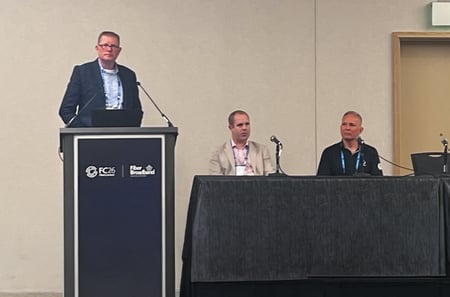 Andrew Wright, Director of Product Management at 3-GIS, joined a panel of industry leaders for a session on identifying and overcoming network expansion roadblocks. The conversation focused on the challenges that don't always show up in early designs: permitting backlogs, environmental restrictions, material constraints, and the internal handoff gaps that slow projects down once construction is underway.
The panel's takeaway was practical. The operators managing expansion well aren't just reacting to obstacles when they appear. They're building processes that surface those issues earlier, so teams can adjust before a bottleneck becomes a delay. For network teams scaling into new markets or adding density to existing builds, that kind of operational foresight is becoming as important as the design work itself.
Validating what operators need next
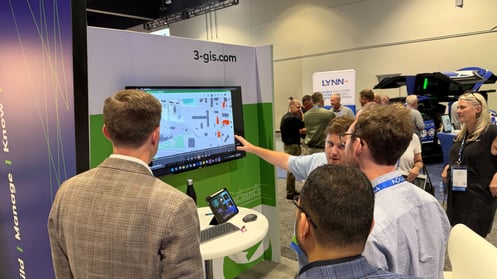
That focus on practical execution also showed up in product conversations at the booth. New equipment modeling and splice pack functionality in the Lio 1 version of 3-GIS | Web drew attention because it speaks directly to the level of detail fiber teams need when managing complex networks at scale. The ability to view and work with that detail in 3-GIS | Web gives teams a more connected way to manage the network information their operations depend on.
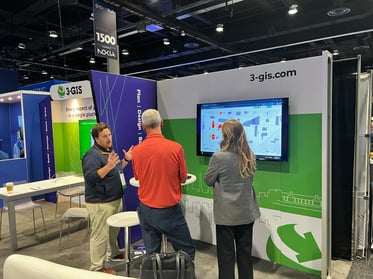
Many conversations were less about surface-level interest and more about validation. Attendees came with specific needs, existing awareness, and internal conversations already in motion. For those teams, Fiber Connect was an opportunity to pressure-test whether 3-GIS could support what comes next, from more detailed network records to more confident decision-making across the business.
What network teams are weighing now
The conversations at Fiber Connect 2026 pointed to a broader shift in how operators are thinking about their networks. The build still matters, but what happens after the build is becoming harder to ignore.
As networks scale, the systems managing them have to support more than design and documentation. They have to help teams operate with cleaner data, stronger interoperability, and the confidence to turn network investments into revenue-generating services.
The question many network teams are sitting with now: can their current tools support the operational realities of a growing fiber network, or is it time to reassess? If your team is asking the same thing, let’s talk.
Citations
1 Broadband Breakfast, "AT&T: On Track for 8 Million Fiber Locations This Year, 60 Million in 2030," https://broadbandbreakfast.com/at-t-on-track-for-8-million-fiber-locations-this-year-60-million-by-2030/